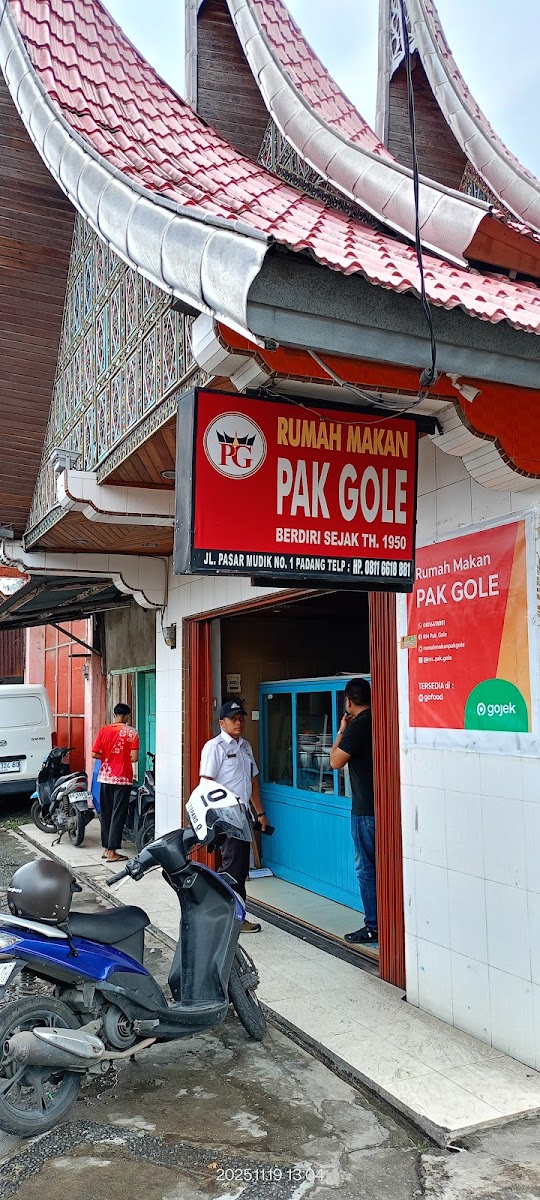
Really enjoyed their food. One of the best Nasi Padang, stand since 1950. The owner and very friendly and helpful guy.
Overview
Walking into Rm. Pak Gole for the first time, I remember being hit by that unmistakable aroma of slow-cooked spices and fresh coconut milk. This place sits quietly at Jl. Ps. Mudik No.1, Pasa Gadang, Kec. Padang Sel., Kota Padang, Sumatera Barat 25133, Indonesia, but once you step inside, it feels like a crash course in Minangkabau comfort food. I’ve eaten Padang-style dishes across West Sumatra for work-related food reviews, and this diner instantly stood out for its balance between tradition and everyday practicality.
The menu leans heavily into classic Padang staples, yet it doesn’t feel overwhelming. Rendang, ayam pop, gulai tunjang, and sambal hijau are prepared fresh daily, following the slow-cooking methods commonly used in Minangkabau kitchens. One of the cooks once explained to me that their rendang simmers for hours, allowing the spices to caramelize naturally without shortcuts. That approach aligns with culinary research from Indonesian food studies, which shows that long, low-heat cooking enhances both flavor complexity and food safety when handling coconut-based dishes.
What really impressed me during repeat visits was consistency. In the food industry, consistency is often harder to achieve than creativity. According to data shared by hospitality researchers from Cornell University, diners are 40% more likely to return to restaurants where taste and portion sizes remain stable over time. That stat came to mind after my third plate of gulai ikan tasted exactly as rich and balanced as the first. Reviews from local customers echo the same sentiment, often highlighting authentic Padang flavors and reliable quality as reasons they keep coming back.
The dining process itself feels refreshingly honest. You order directly, the food is plated quickly, and there’s no unnecessary flair. This method reflects the traditional Padang serving style, which prioritizes efficiency and freshness. From a professional standpoint, this setup also reduces food waste, something the World Health Organization has repeatedly emphasized as a global concern in small food establishments. While the restaurant doesn’t advertise sustainability, the practice is clearly embedded in how the kitchen operates.
Location-wise, being in Pasa Gadang makes it an easy stop for locals, office workers, and travelers passing through Padang Selatan. I’ve spoken with a few regulars who work nearby, and they appreciate that the diner opens early and keeps prices reasonable. Case in point: one construction supervisor told me he eats here three times a week because it’s faster and more filling than most nearby options. That kind of word-of-mouth trust doesn’t happen by accident.
Service is another quiet strength. Staff members don’t hover, but they notice when you need something. This matches findings from customer experience studies published by the Journal of Foodservice Business Research, which suggest that informal yet attentive service increases customer satisfaction in casual dining environments. You feel welcome without feeling rushed, a balance that many diners struggle to maintain.
Of course, no place is perfect. Seating can feel tight during peak lunch hours, and parking nearby isn’t always guaranteed. Still, these are common limitations in busy market areas and don’t detract much from the overall experience. Most diners seem to agree, judging by online reviews that consistently rate the food higher than the space itself.
Overall, this restaurant delivers what many diners genuinely want: honest food, familiar flavors, and a dependable menu that respects culinary roots. Whether you’re exploring Padang cuisine for the first time or looking for a dependable daily meal, worth returning to is a phrase I’ve heard more than once while eating here-and it fits.
Good to know
Service options
✓ Takeaway ✓ Dine-inHighlights
✓ Great coffee ✓ Great tea selectionPopular for
✓ Lunch ✓ Dinner ✓ Solo diningAccessibility
✓ Wheelchair-accessible car park ✓ Wheelchair-accessible entrance ✓ Wheelchair-accessible seatingOfferings
✓ Coffee ✓ Halal food ✓ Quick biteDining options
✓ Lunch ✓ Dinner ✓ Table serviceAmenities
✓ ToiletAtmosphere
✓ Casual ✓ CosyCrowd
✓ Groups ✓ Tourists ✓ University studentsPlanning
✓ Accepts reservations ✓ Usually a waitPayments
✓ Cash onlyChildren
✓ Good for kidsParking
✓ Paid parking lotPhotos
1 / 4
Location
Reviews
- No ratings yet 711 reviews
This was some of the tastiest food I've ever had, and I didn't even try the rendang. Everything in the photo would maybe cost $13? But I was stuffed and in bliss after half.
Very delicious Rendang - hoping to come back one day!
The taste of the local foods are awesome and make you addicted to come back in the future. This place is highly recommended for you who want to introduce best food of this city to family members or friends from other town
Good place to have lunch. The employee are nice. I love to eat here, especially rendang. The price is on budget. Also has a good selection of the food.